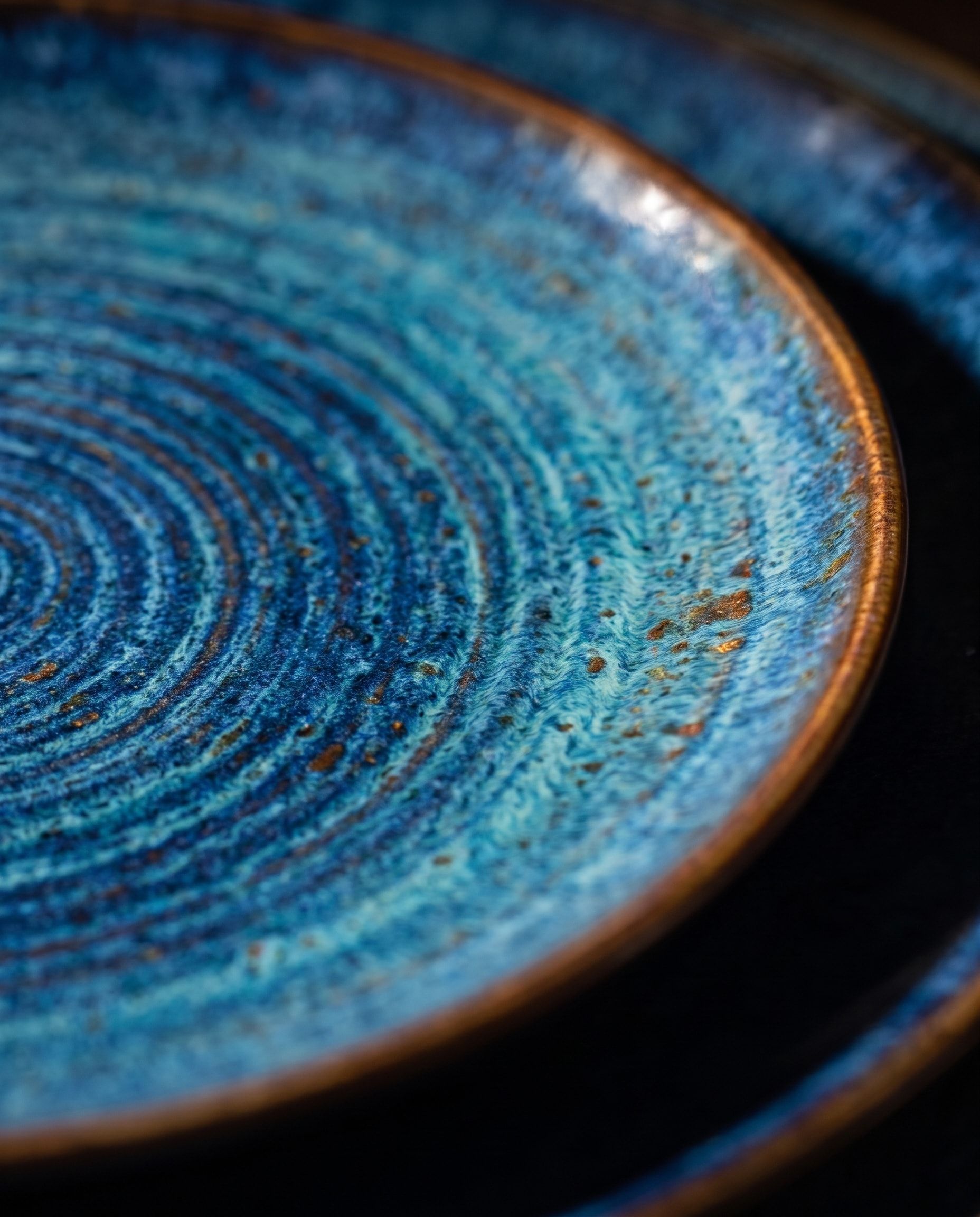
How the pieces are made
How each plate, bowl and piece of cutlery is designed, made and inspected, described plainly, with what we are still confirming.
The NEELĀ glaze, close up. Concept visualisation.
Materials, stated plainly
We describe a material only when we can confirm it, and say so when we cannot yet.
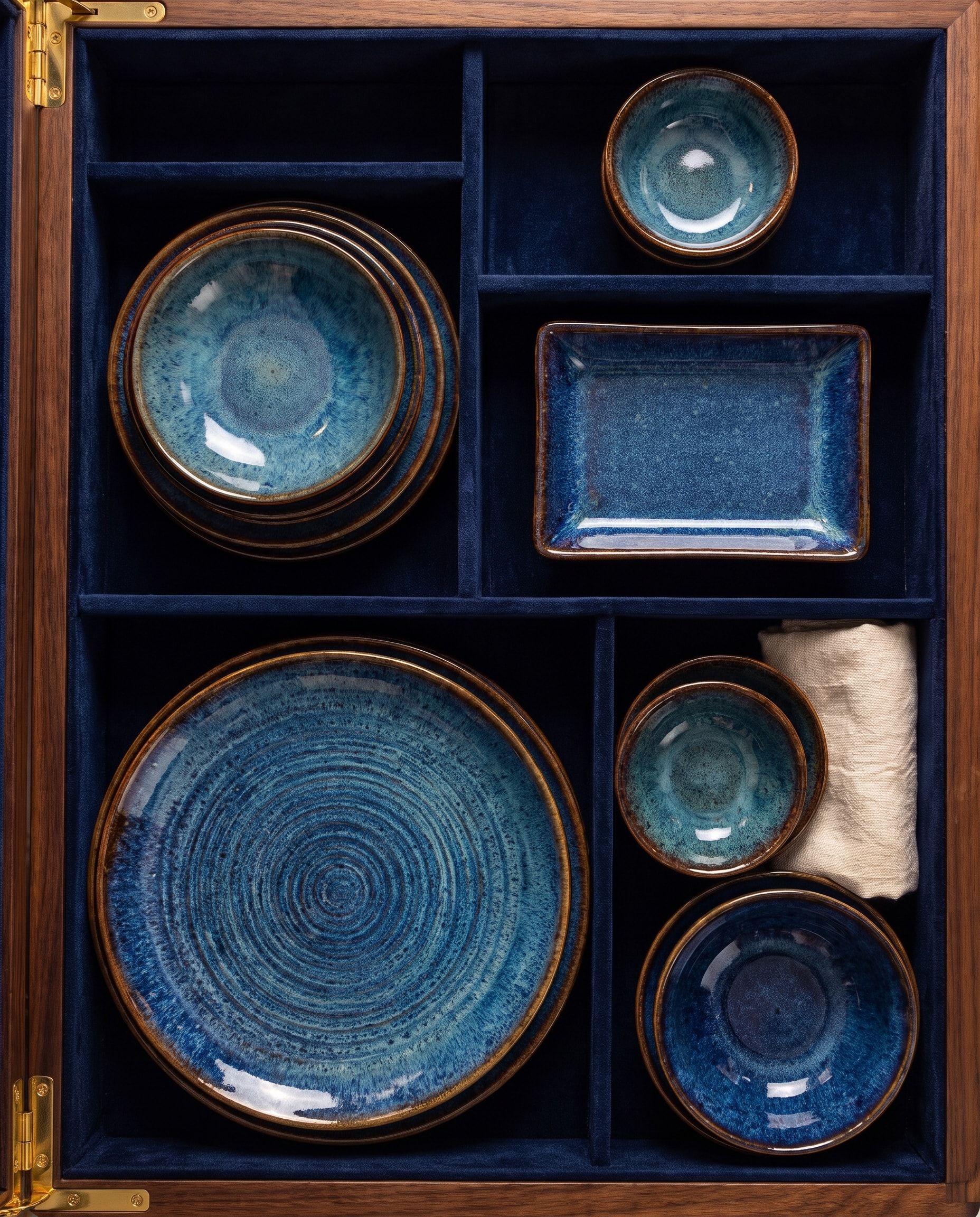
The NEELĀ glaze. Concept visualisation. NEELĀ dinnerware
Blue-glazed. The clay body, the glaze and the rim finish are confirmed at sampling, together with food-contact testing.
View the NEELĀ dinner set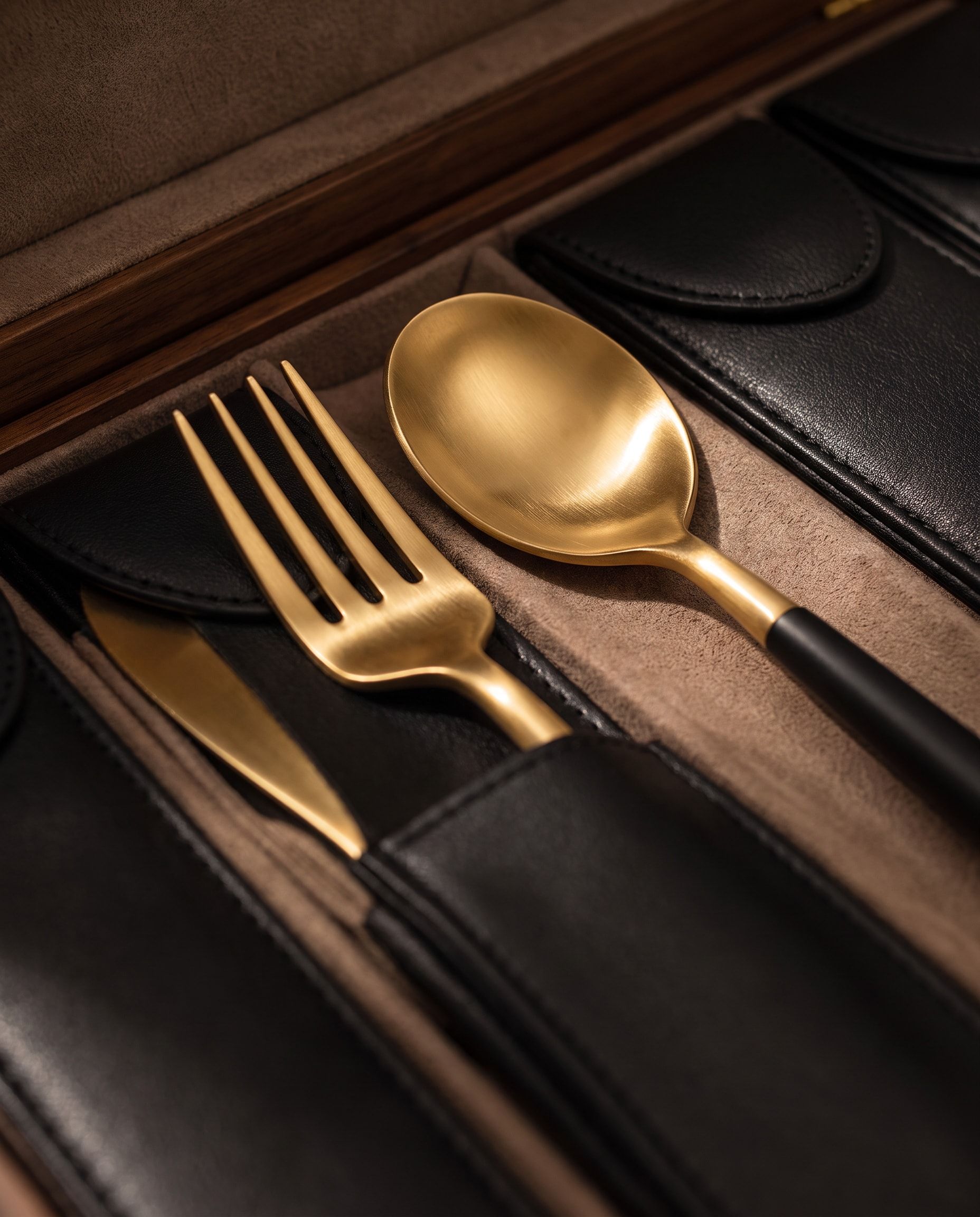
The ĀBHĀ finish. Concept visualisation. ĀBHĀ cutlery
The metal, the gold-toned finish and the handle material are confirmed at sampling.
View the ĀBHĀ cutlery set
What each set arrives in
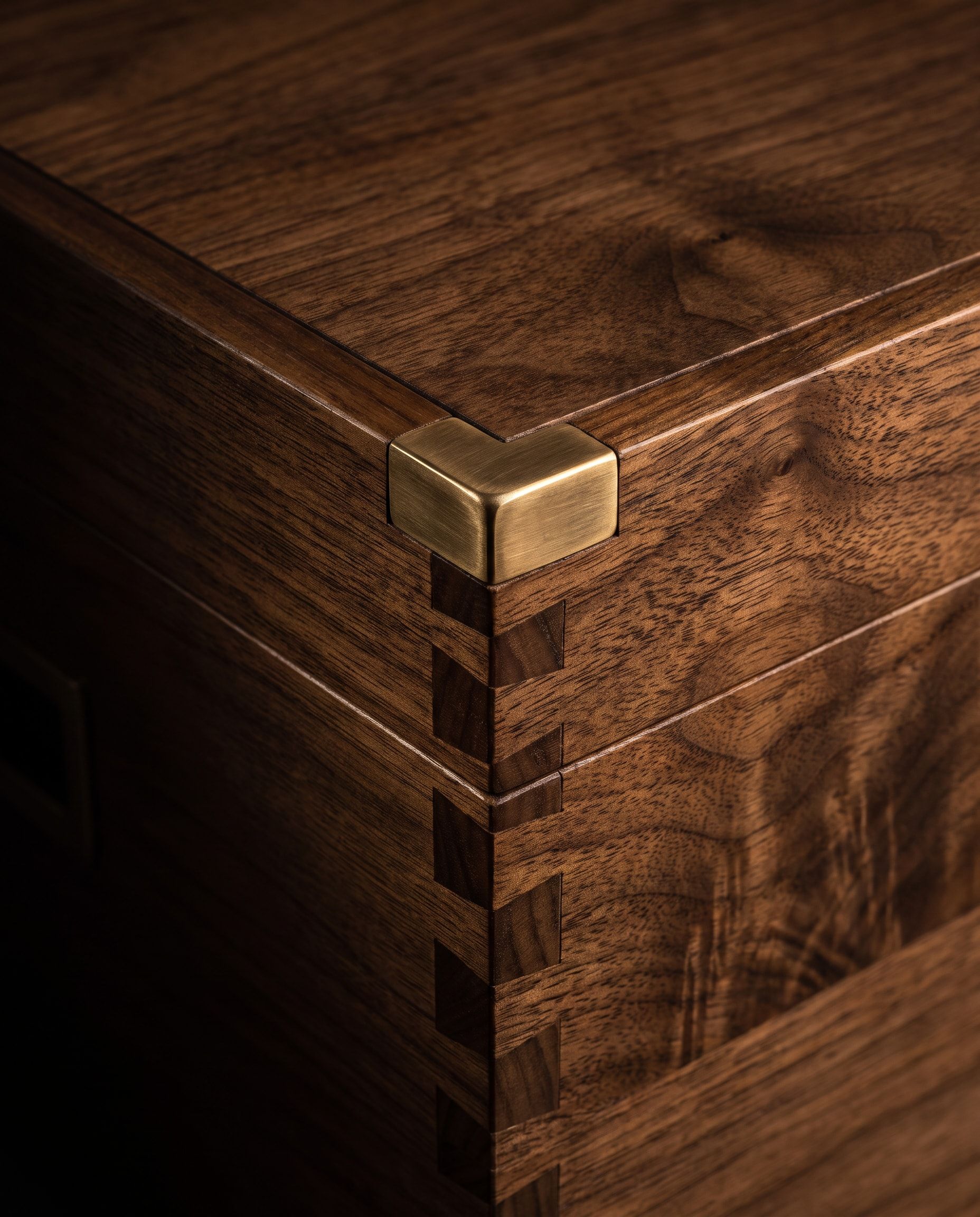
Walnut at the corner. Concept visualisation. The chest
Walnut. Whether it is solid timber, veneer over a stable core or a combination of the two is being settled with our production sample. We will state it exactly before you commission.
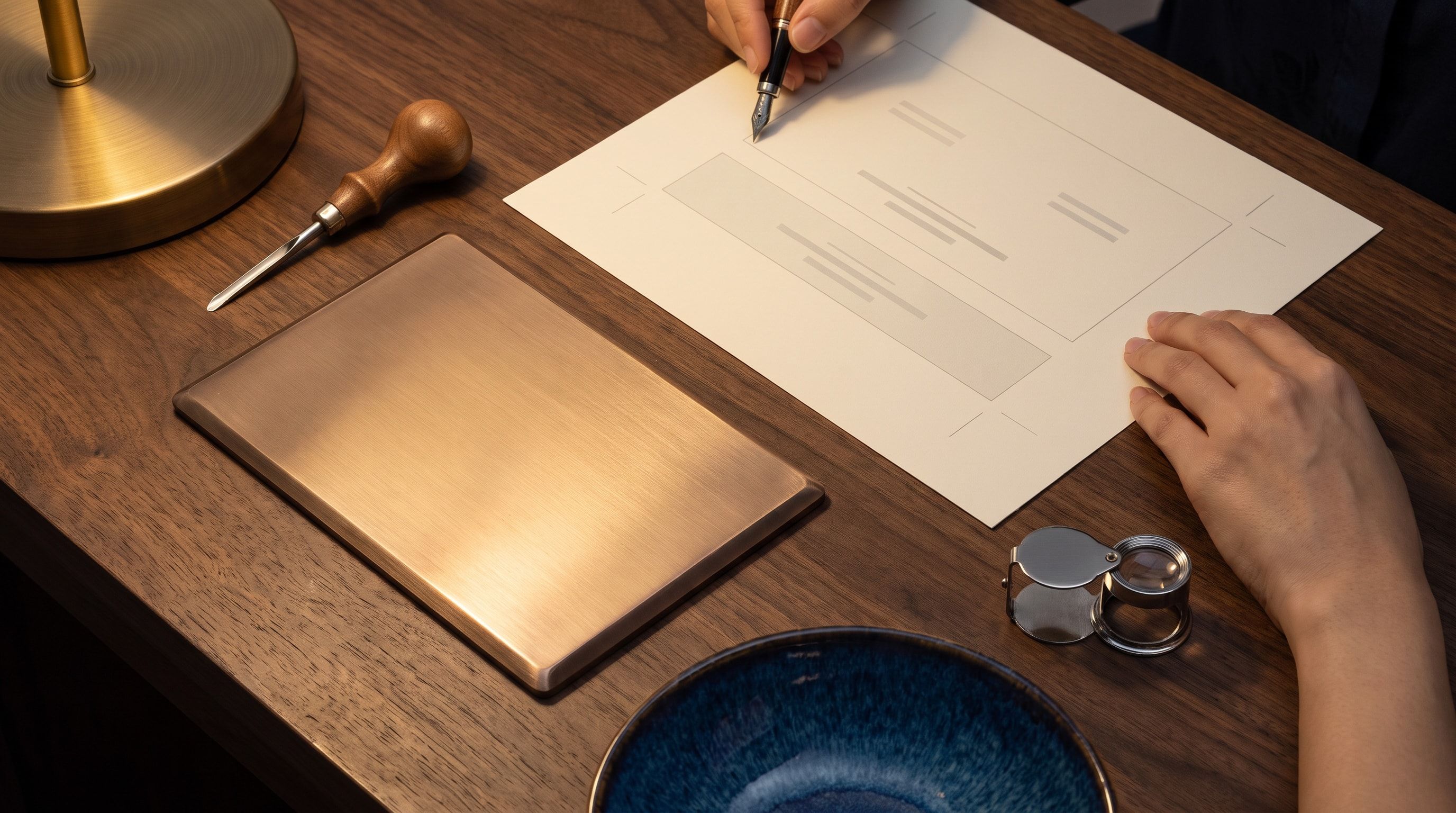
A plaque before engraving. Concept visualisation. The plaque
Engraved bronze. The exact alloy is confirmed with the production sample.
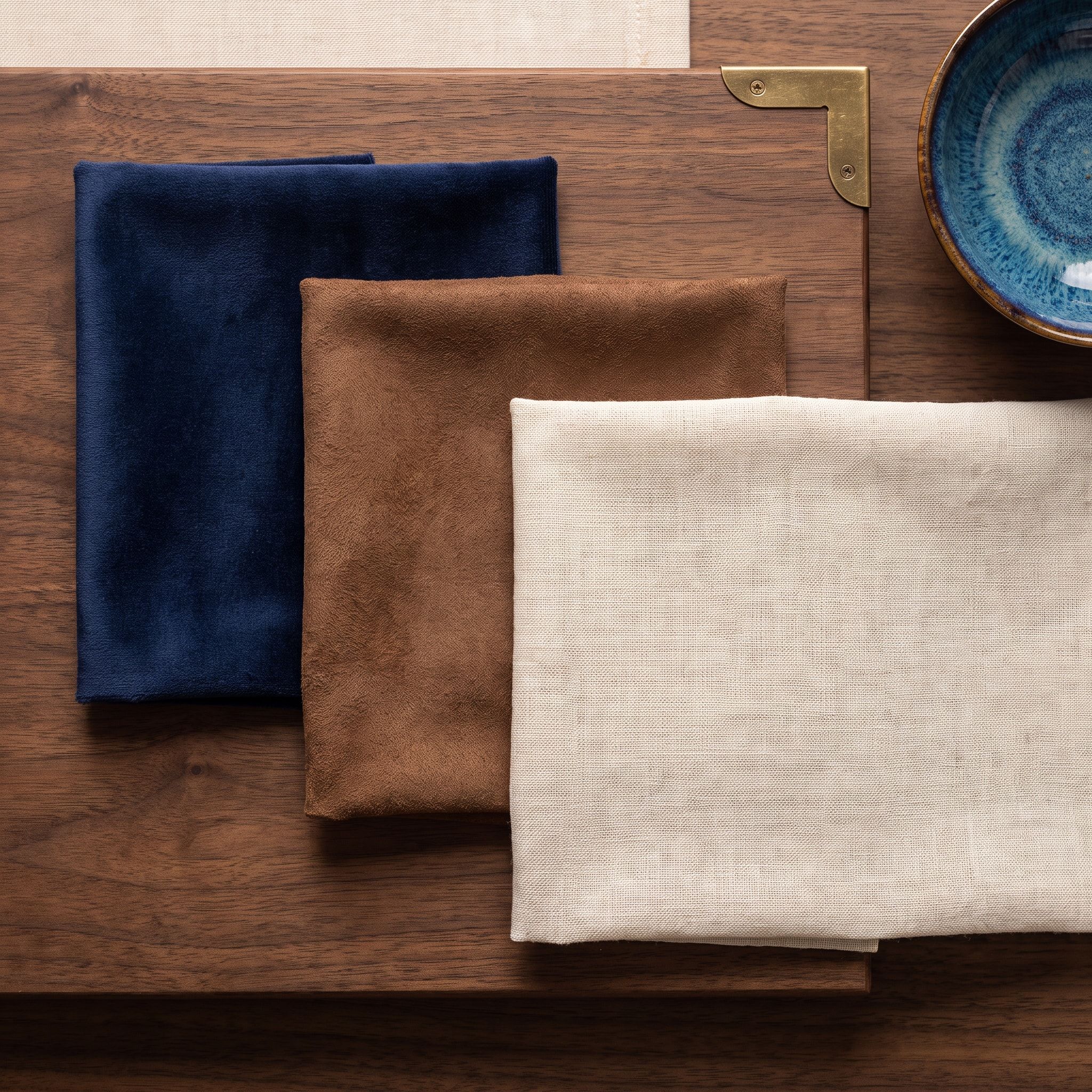
The three linings. Concept visualisation. The linings
Indigo velvet, walnut-brown suede and ivory linen are the options we are developing. Their exact materials are confirmed at sampling.
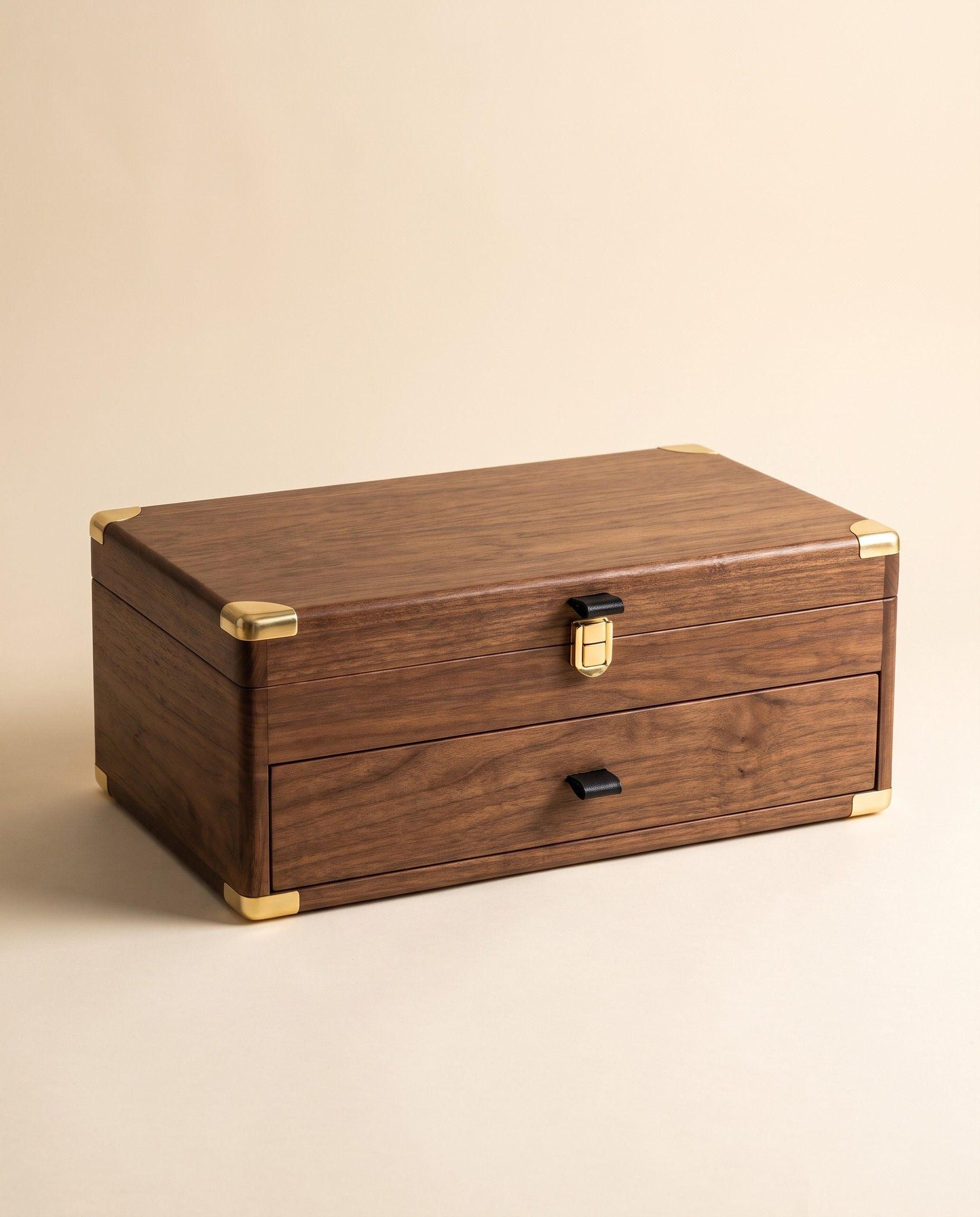
A catch and a corner guard. Concept visualisation. The hardware
Hinges, corners and handles are gold-toned. Their metal is confirmed with the production sample.
The close-ups above are concept visualisations.
Care guidance is published for each series once its pieces have been tested.
How we advise on care todayDesigned around Bengali meals
We start from what is served, and how it reaches the table.
A Bengali meal is shared from the centre of the table. Rice comes first and stays. Fish wants a platter of its own. Bhorta arrives in small portions, several at once. Dal and jhol need bowls with some depth, and the meal ends with something sweet: mishti, payesh or doi.
So our compositions include serving pieces for each. In consultation we also ask about the size of your table, where the pieces will be stored, how many people you usually serve and how your household prefers to wash up. A collection should still be practical long after its first evening.
Rice
Rice serving bowl
Rice or polao for the table
About 26 cm across
Fish
Oval fish platter
Ilish or rui, whole or in pieces
About 36 cm long
Curries and dal
Two curry servers
A deep bowl for curries, dal or korma
About 20 cm across
Bhorta
Four bhorta dishes
Aloo, begun or shutki bhorta
About 12 × 9 cm
Sweets
Six dessert bowls
Payesh, firni or mishti doi
About 13 cm across
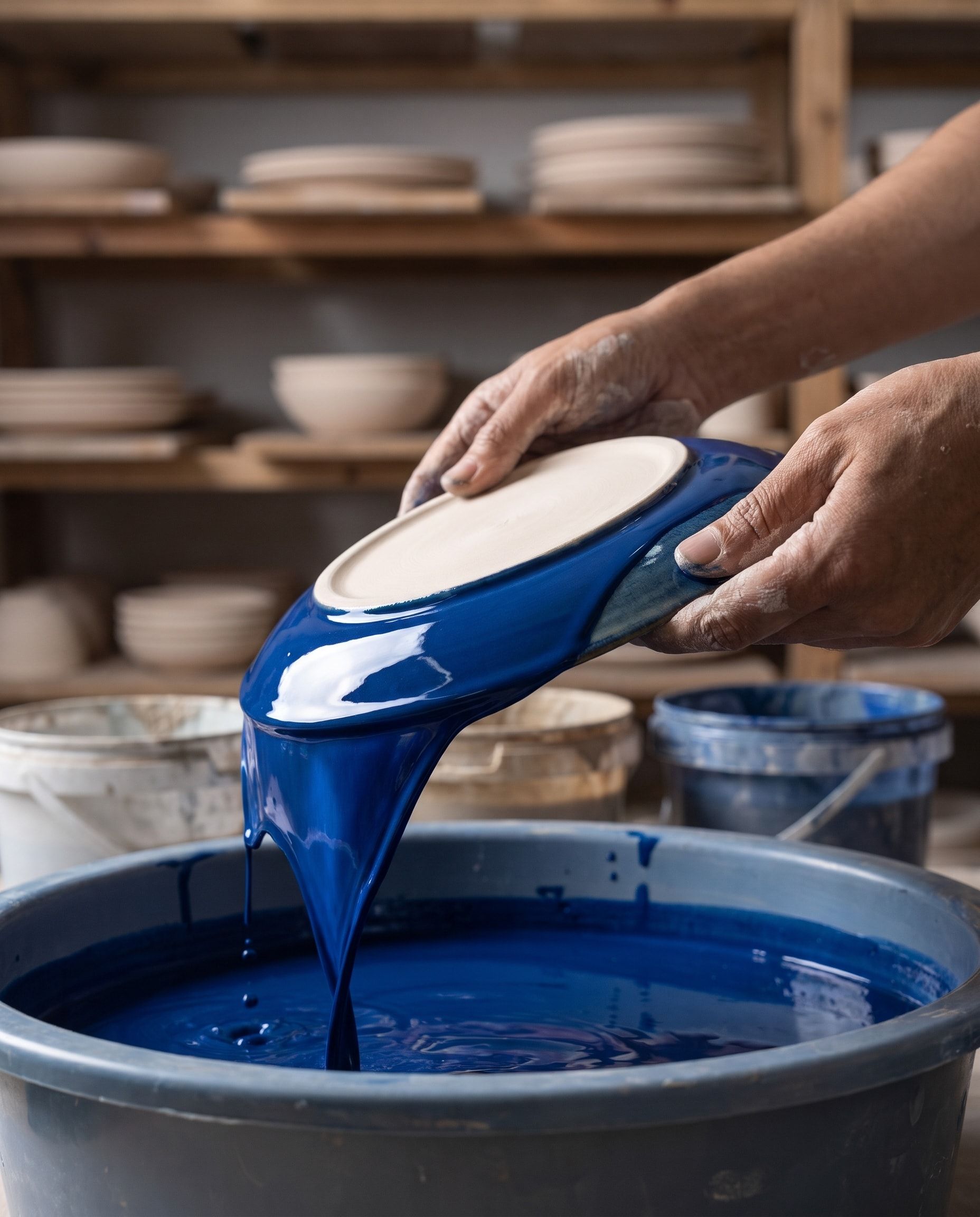
From drawing to table
The stages every collection passes through, with film of each as production begins.
- Design
- The pieces, the colour and the plaque are settled with you, and every approval is recorded in writing.
- Sampling
- A reference sample is made and approved before any set goes into production. Every later set is checked against it.
- Making
- We work with makers chosen for each material, and the pieces are made in batches against confirmed orders.
- Finishing and engraving
- Edges and glazes are checked against the sample, and the plaque is engraved with the text you approved on the proof.
- Inspection
- Every complete set is inspected before it is packed.
- Packing
- Each piece into its place, the chest into its cover, the cover into protective packaging.
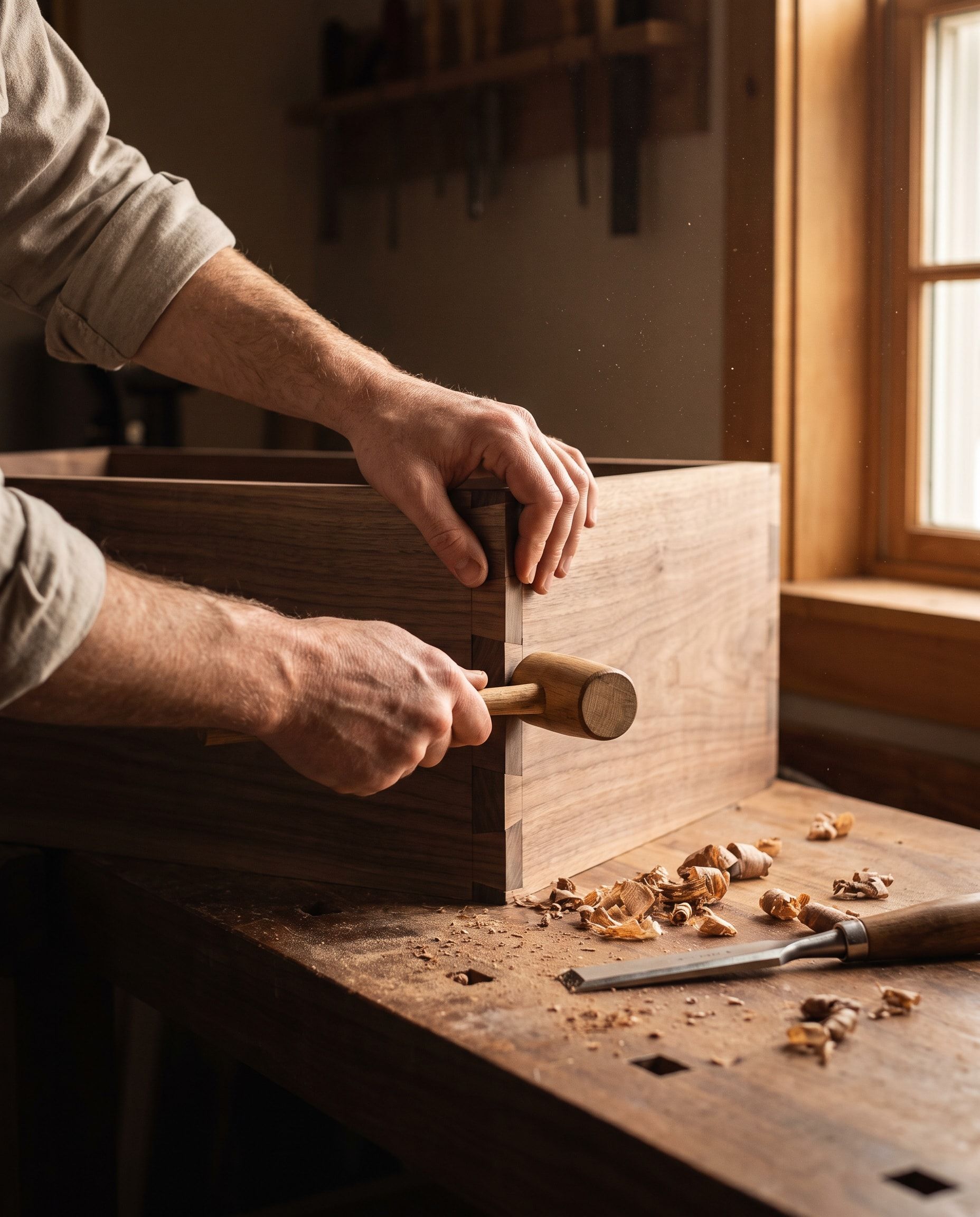
Inspected against the sample
Every complete set is checked against an approved reference sample before it is packed.
A piece that falls short is not sent. We make it again.
What we check, set by set
- The count of pieces against your proposal
- The glaze colour and surface against the sample
- Every rim and edge, for chips and roughness
- The fit of each piece in its place in the chest
- The spelling and layout of the engraving against your approved proof
- The lid, the hinges and the drawers of the chest
Packed to travel
The chest travels inside its fabric cover and protective outer packaging.
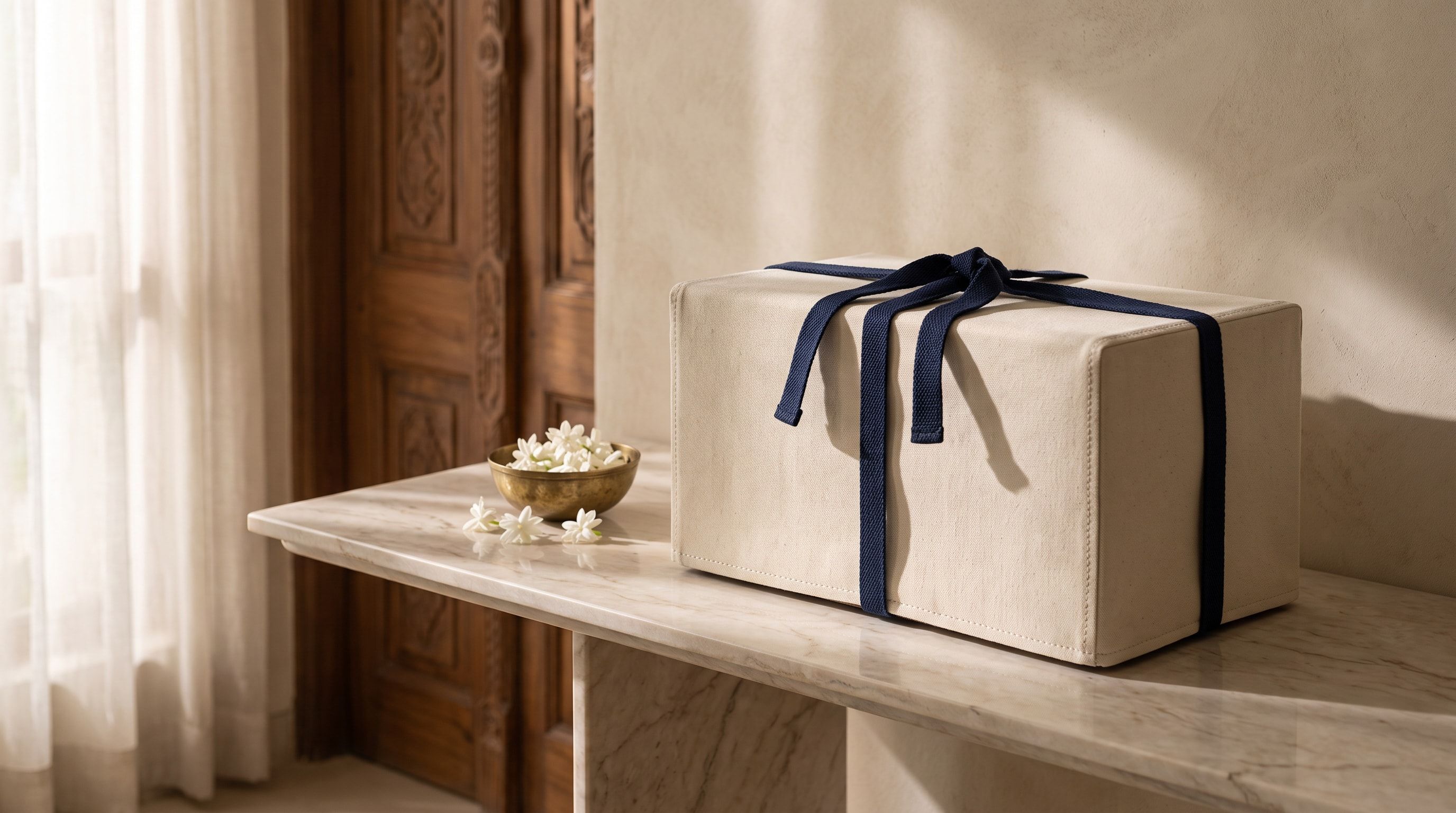
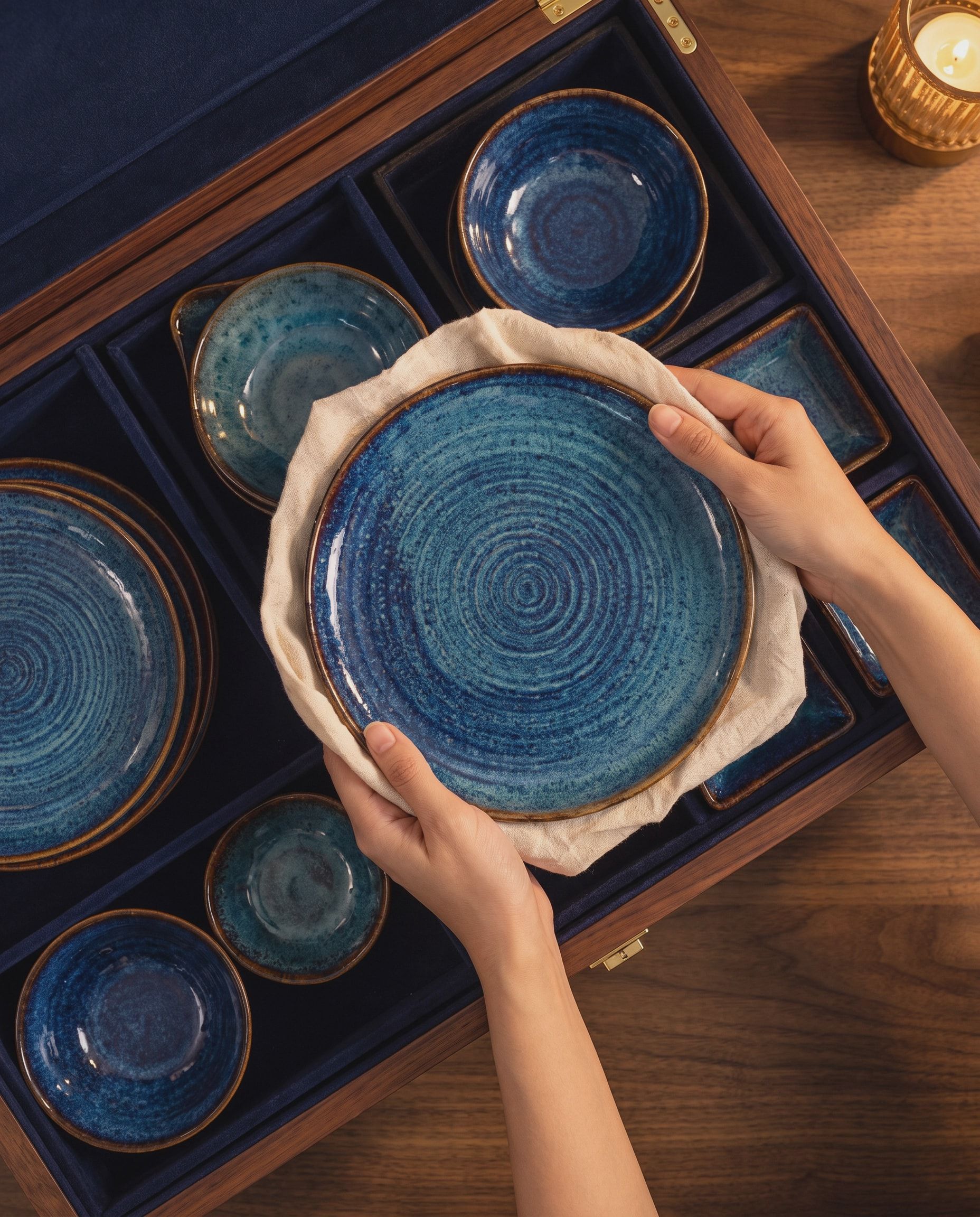
We deliver within Dhaka first, at a time agreed with you.
If anything arrives damaged, photograph it and tell us within 48 hours. Our intention is to replace any piece damaged in transit at no cost to you; the full terms will be published before we take any payment.
Production takes about 10–12 weeks from your approval of the proposal.
Delivery and cancellationHow it arrives
How you meet a BHOJ collection, from the outer packaging to the last piece.
Protective outer packaging opens to a tailored fabric cover.
Inside the cover, the walnut chest.


The lid lifts to show the engraved bronze plaque and your dedication letter.
A sample plaque, with invented names. Before anything is engraved, we send you a proof of the exact spelling and layout to approve.
The pieces rest in fitted places, with lifting tabs and drawers beneath.
A story card opens the design film by NFC or QR, with a copy you can download.
The story card opens a private page: the design film, your dedication, your edition certificate and the care guide. Hold your phone to the card, or scan its code. Only people with the card can see the page, and it is hidden from search engines. See an example of the private page.
A named contact at BHOJ helps with care, and with anything after delivery.
The chest is meant to stay in use after the evening it arrives, as a place to keep the pieces or to display them.
Cookware, later
We will add cookware once its construction, heat performance and care have been proven.
A presentation chest cannot tell you how a pan cooks. Until our cookware has been tested, BHOJ makes dinnerware and cutlery only.
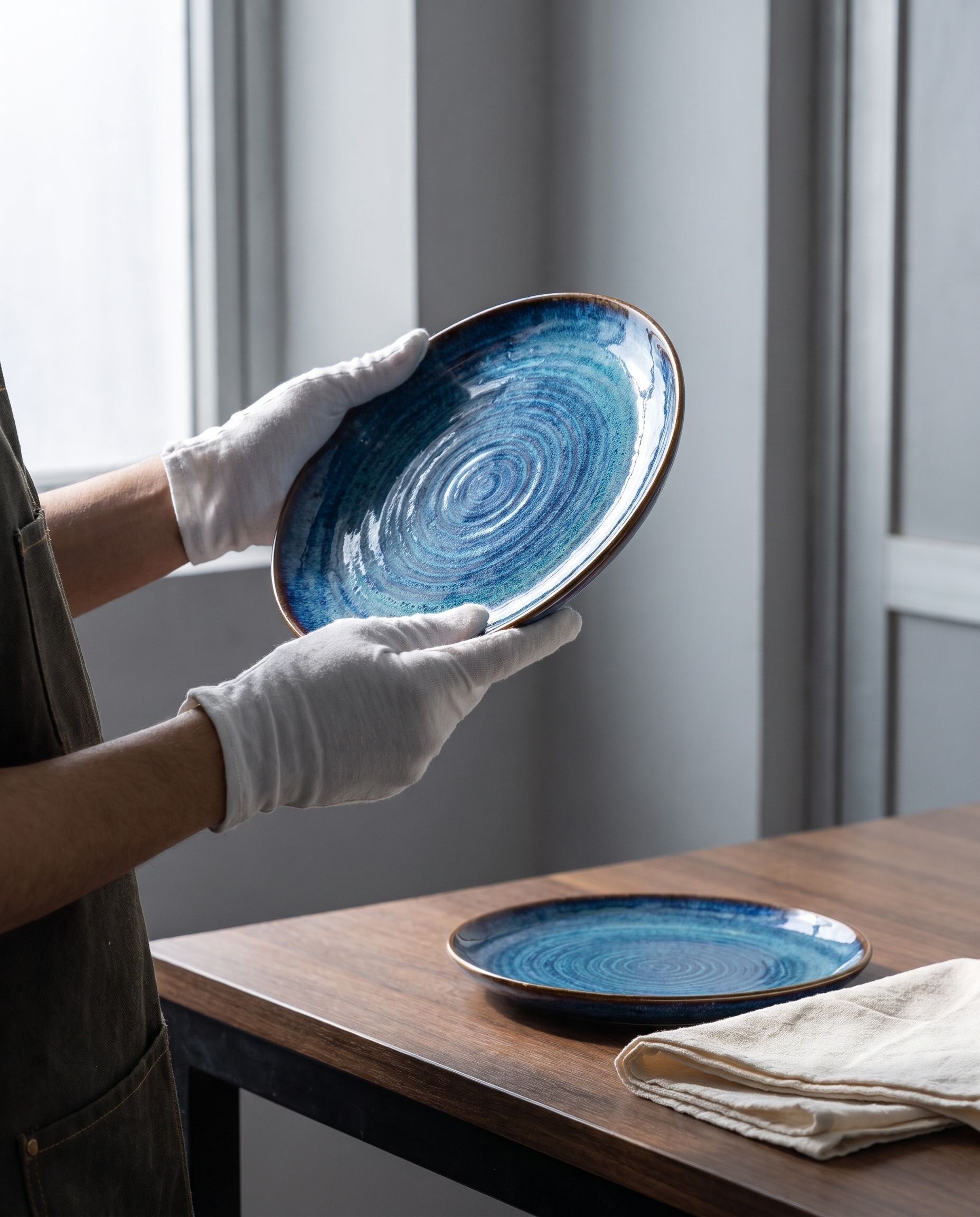
A private appointment
Ask us anything about the pieces, the materials or the making. Where we do not yet know, we will say so.
- WhatsApp concierge
- +880 1XXX-XXXXXX
- Hours
- Sat–Thu, 10:00–19:00 (Dhaka)
- We reply
- Within one working day
Concept visualisation.